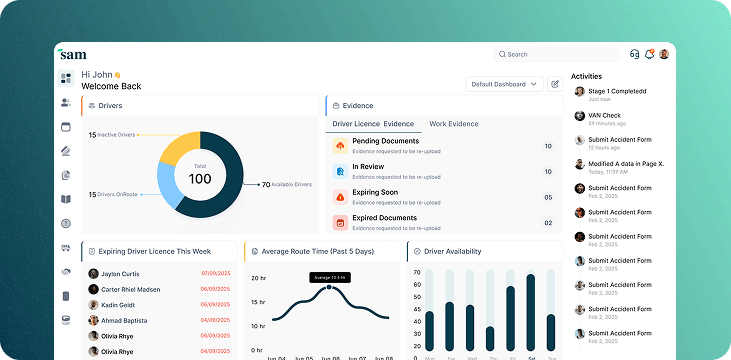
SAM Onboarding
Turned paper vehicle checks into a 4-minute mobile workflow, cutting inspection time by 78% and establishing a mobile-first foundation for 67+ shops.

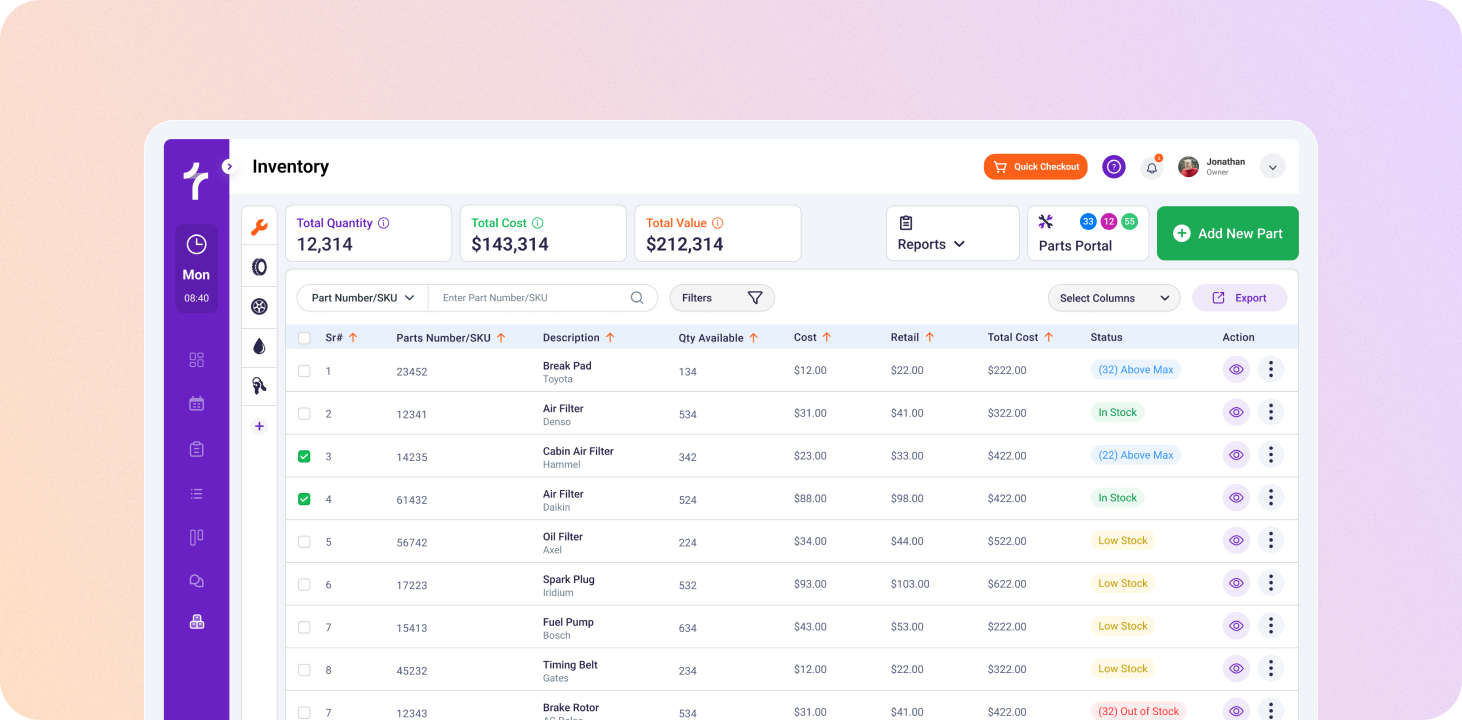
Torque360's original inventory system tracked parts in name only, barely tracking generic "parts" while shops struggled to manage the real complexity of auto repair: oil filters, brake pads, tires, wheels, fluids, and custom assemblies. As the solo product designer, I rebuilt it into a market-standard auto repair inventory engine that handles every item type a shop touches.
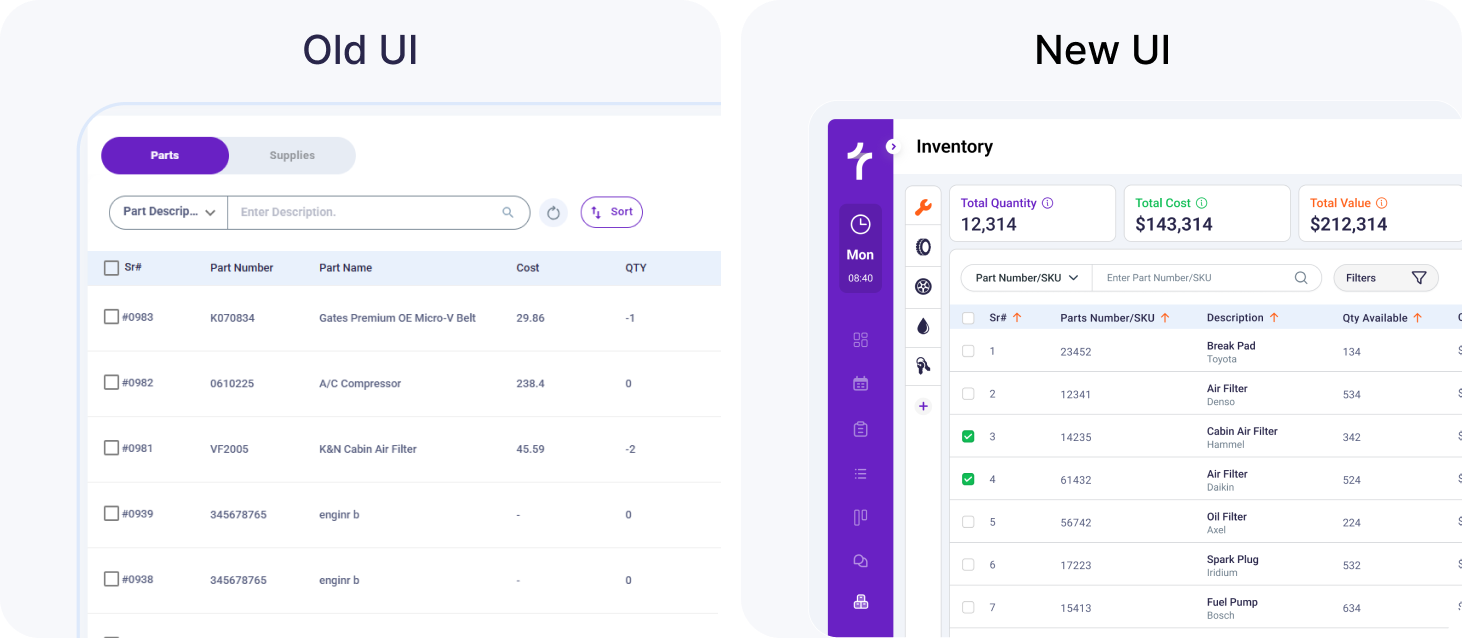
Starting with the most critical gap, Dynamic item categories for parts, tires, wheels, and custom items.I designed a flexible architecture that turned fragmented tracking into a unified system purpose built for bays, not back offices.
The result reduced items ordering time while giving shops real-time control over their entire parts ecosystem.
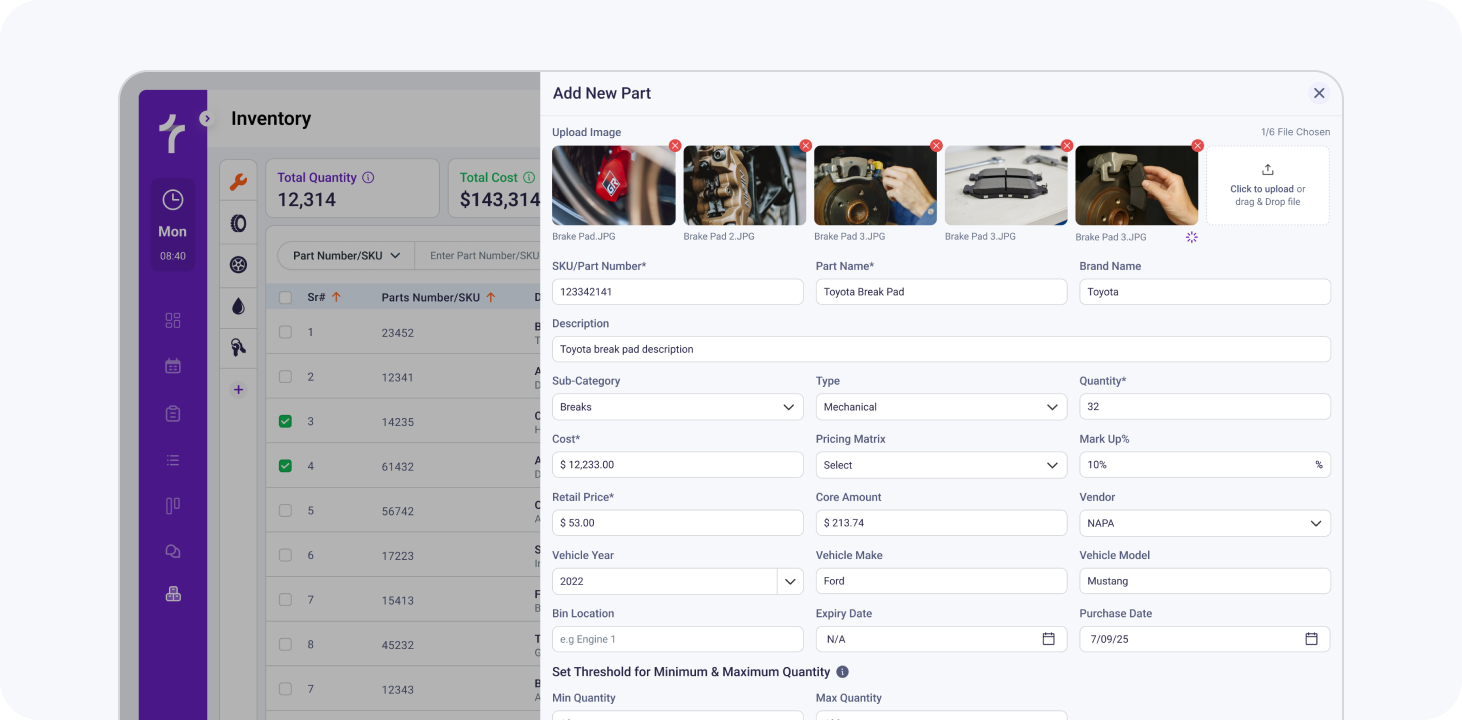
The data confirmed what sales kept hearing: our inventory feature couldn't tell a tire from a timing belt. Shops needed to track distinct item types like parts, tires, wheels, fluids, and custom kits, Each with unique fields (tire DOT codes, wheel offsets, part Id numbers), but we offered one generic template. The result was chaos.
The experience wasn't broken; it was misaligned. No native support for tire size lookups, no wheel fitment guides, no kit bundling for brake jobs. Shops were losing money because the system couldn't speak their language.
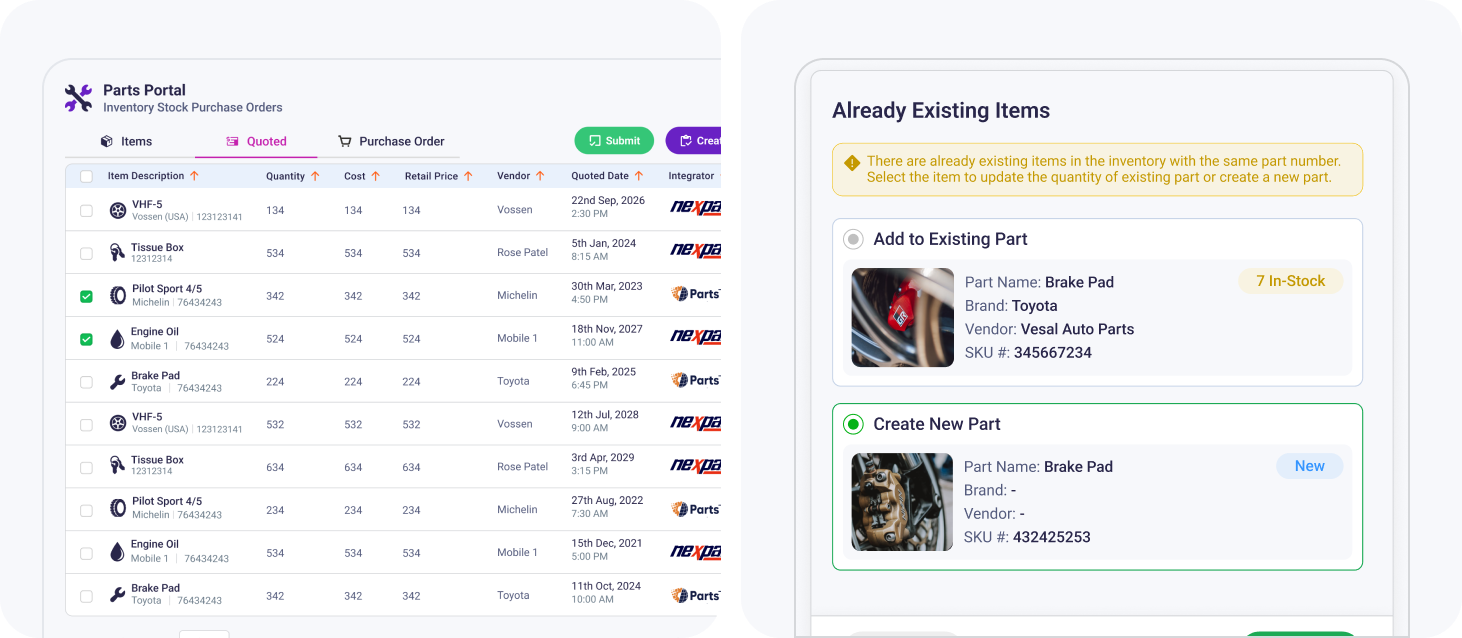
I structured the work in three moves: Deconstruct → Rebuild → Standardize.
It turned a generic tracker into the single source of truth for our customer base.
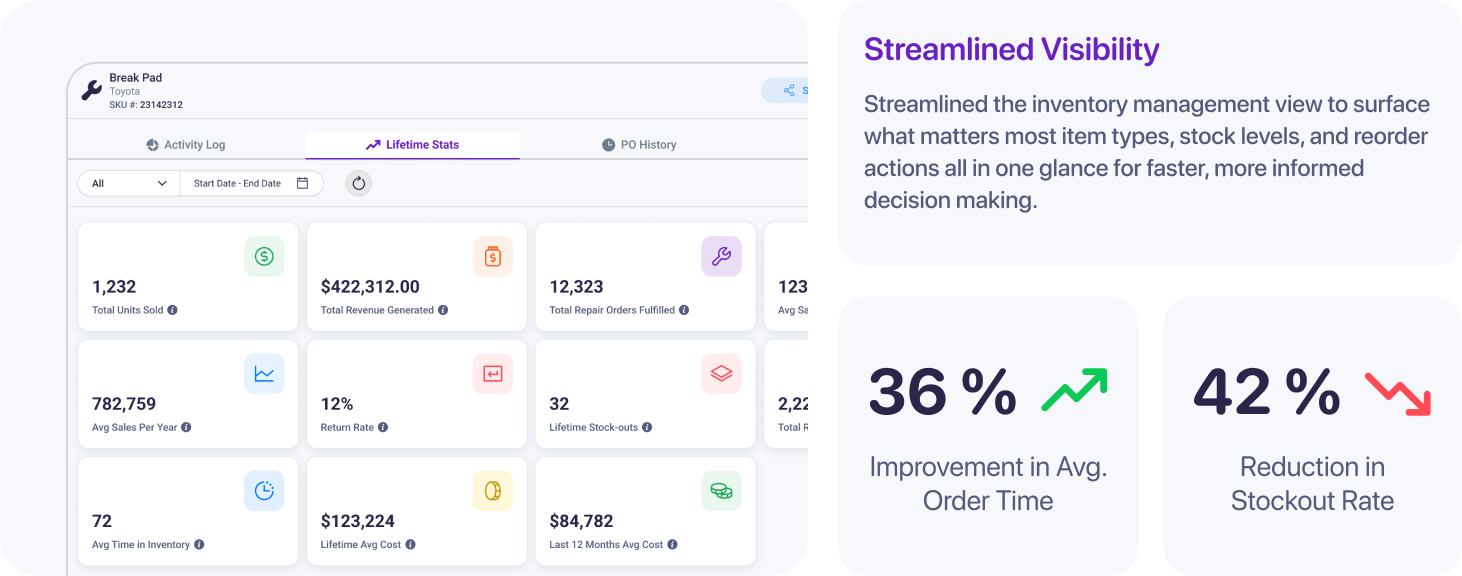
Technicians stopped guessing if "235/45R17" was in stock and started seeing exact specs, DOT age, and bay location with one scan. The dashboard surfaced low-stock alerts, cost per job, and item specific reorder points all in one glance, turning parts, tire, and wheel ordering from a memory game into a confident decision.
Item management meant a shop could track everything from specialty brake fluids to staggered wheel sets, each with its own depreciation, supplier, and fitment logic. The workflow became predictable: scan barcode, update stock, trigger reorder.
These same principles later scaled to purchase orders and vendor rebates, turning fragmented tracking into a unified financial control layer that speaks auto repair natively.
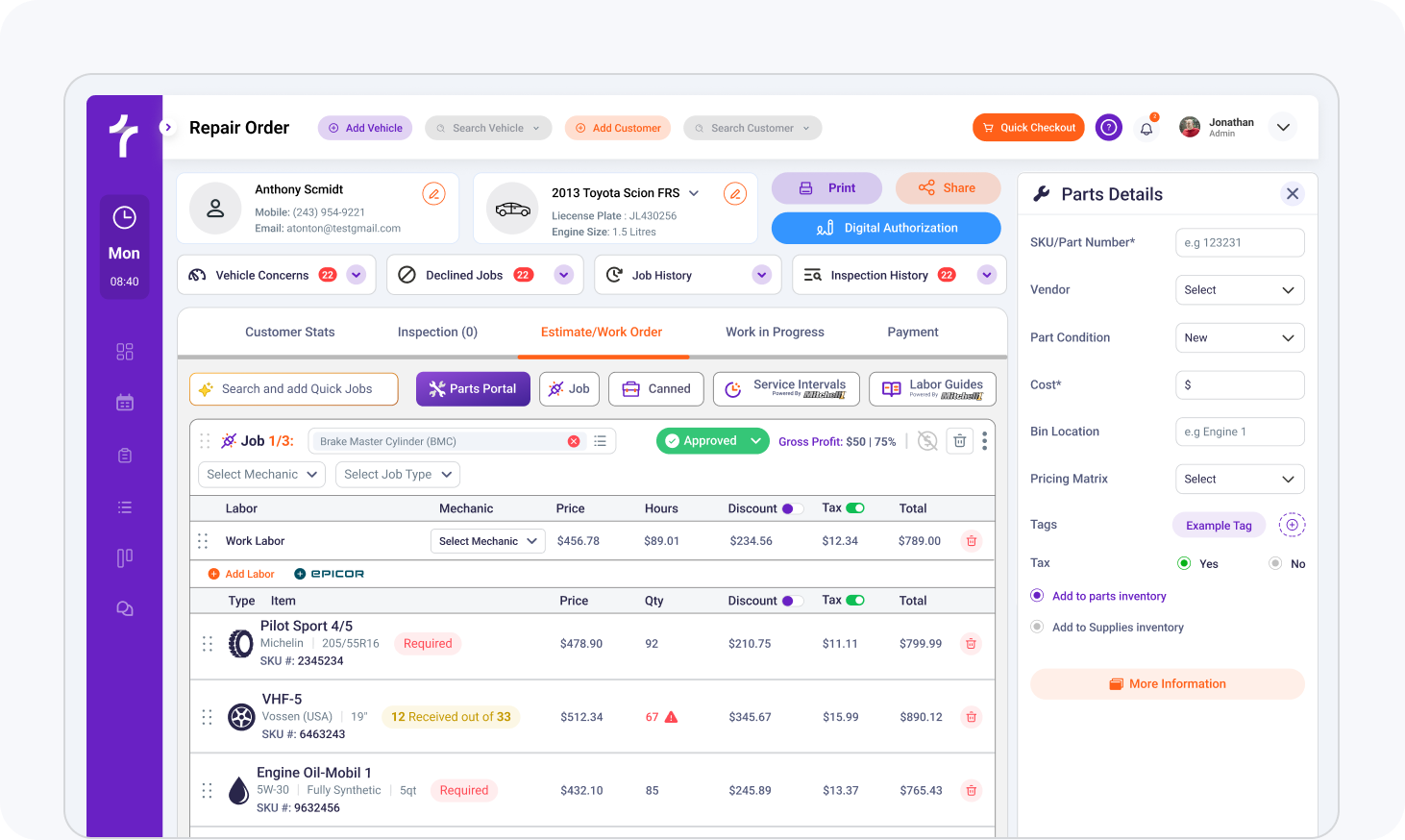
The design didn't just track inventory, It gave shops a profit aware system that understands the difference between two separate items like a part or a wheel.
Turned paper vehicle checks into a 4-minute mobile workflow, cutting inspection time by 78% and establishing a mobile-first foundation for 67+ shops.
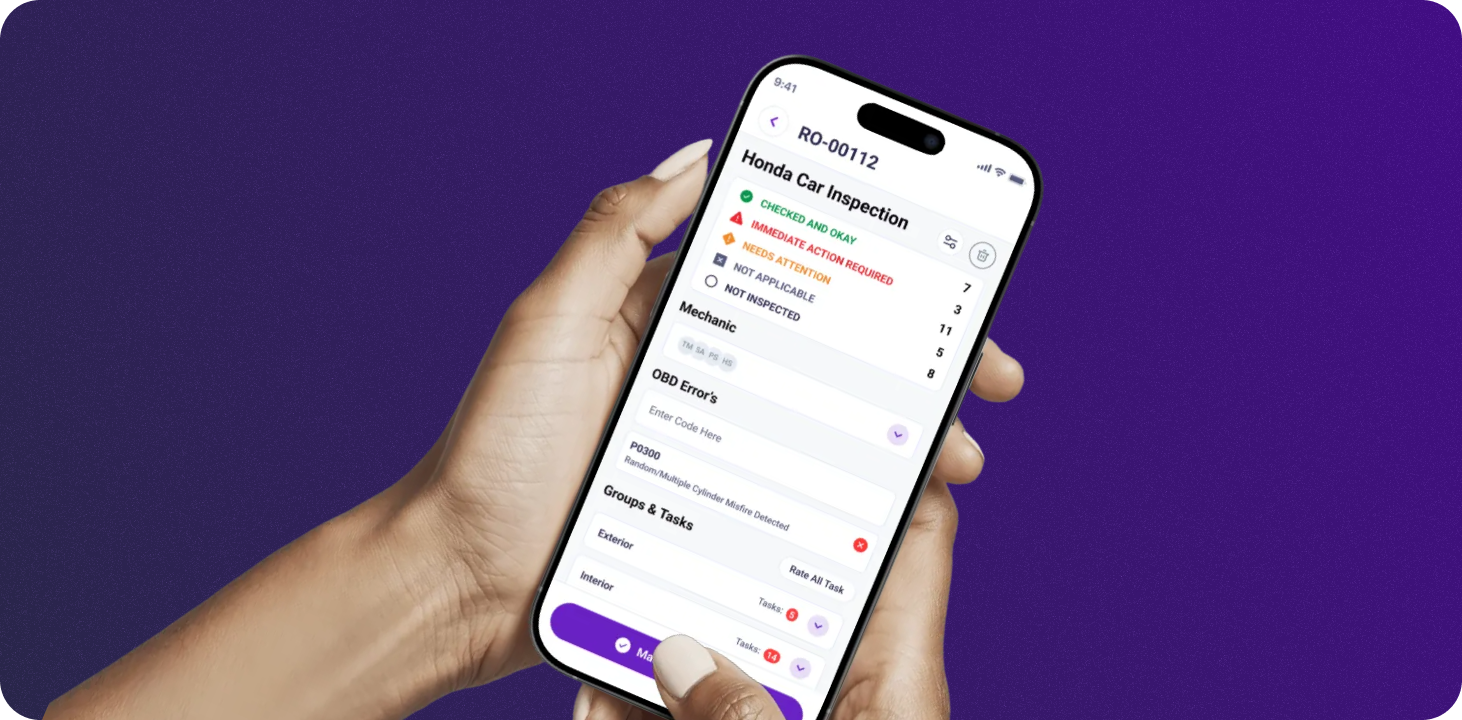
Turned paper vehicle checks into a 4-minute mobile workflow, cutting inspection time by 78% and establishing a mobile-first foundation for 67+ shops.